Introduction
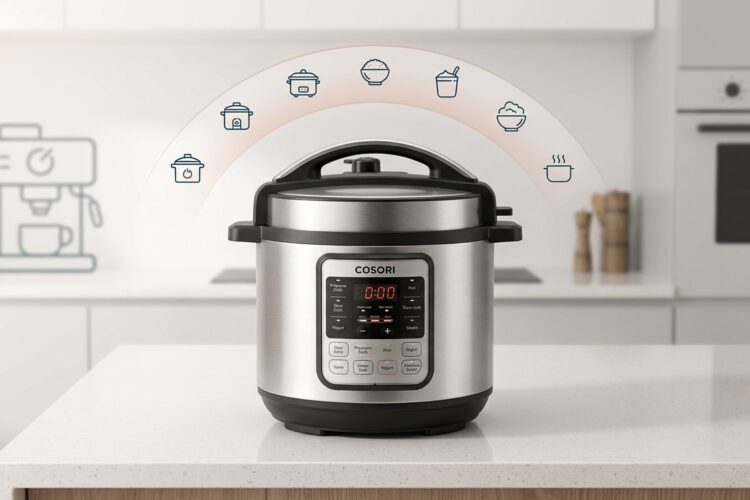
Multi-cookers have become increasingly common across many kitchens, but the specific materials and safety engineering behind each model can vary meaningfully between brands. The Cosori Pressure Cooker 6QT combines a 9-in-1 function set with a ceramic-coated inner pot, departing from the stainless steel surfaces found on many other multi-cookers, while also emphasizing a notably detailed safety profile built around twelve distinct safety features.
This article takes a close look at what this particular Cosori model offers, the different everyday cooking situations in which it tends to be used, who this kind of mid-size, safety-focused pressure cooker is generally best suited for, and a range of practical points worth thinking through before adding one to a kitchen.
Key Features
Nine Cooking Functions
As the “9-in-1” naming suggests, this appliance combines a fairly comprehensive set of cooking functions into a single device. This generally includes core functions like pressure cooking, slow cooking, rice cooking, steaming, and sautéing, along with additional settings that may cover functions like yogurt making, warming, and other specific presets depending on the exact model configuration.
Ceramic-Coated Inner Pot
Rather than the stainless steel inner pot found on many other multi-cookers, this model uses a ceramic coating. Ceramic coatings are generally marketed around ease of cleaning and food release, while also serving as an alternative material option for consumers interested in avoiding certain traditional non-stick chemical coatings, offering a different surface experience compared to bare stainless steel.
6-Quart Capacity
This model offers a 6-quart capacity, placing it within a commonly chosen, practical mid-range size for the broader pressure cooker category, generally well suited to small to medium households without requiring the bulkier footprint of larger-capacity models.
Twelve Safety Features
A particularly notable aspect of this model is its emphasis on safety engineering, with the product specifically highlighting twelve distinct safety features. While exact safety mechanisms can vary by model, pressure cookers in this category generally incorporate protections such as lid-locking mechanisms that prevent opening under pressure, automatic pressure release safeguards, and temperature or pressure sensors designed to prevent overheating or excessive pressure buildup. This particular model’s emphasis on a detailed, numbered safety feature set suggests a more comprehensive approach to these kinds of built-in protections compared to some more basic pressure cookers.
Pressure Cooking as a Core Function
As with other appliances in this category, pressure cooking remains central to this device’s functionality, using sealed steam to raise internal pressure and cook food at higher temperatures than standard boiling, generally resulting in meaningfully reduced cooking times for foods like dried beans, tougher cuts of meat, or whole grains.
Sauté Function for One-Pot Cooking
As with most multi-cookers in this broader category, this model generally includes a sauté setting, allowing ingredients to be browned directly in the pot before switching to pressure cooking or another function, reducing the number of separate pans needed during meal preparation.
How It Can Be Used
Given its combination of a practical mid-size capacity and a notably detailed safety profile, this appliance tends to be used across a fairly wide range of everyday cooking situations.
Everyday pressure cooking for small to medium households. The 6-quart capacity makes this model well suited to typical household cooking needs without requiring the larger footprint associated with bigger-capacity models.
Those prioritizing safety-conscious appliance choices. Given the emphasis on twelve distinct safety features, this model may be specifically chosen by those who want added reassurance around built-in protections, particularly relevant for households newer to pressure cooking or those simply prioritizing safety engineering as a key purchasing factor.
Batch cooking grains and legumes. As with other pressure cookers, dried beans, lentils, and various grains can generally be prepared more quickly under pressure, supporting meal prep routines for the week ahead.
One-pot meal preparation. The included sauté function allows ingredients to be browned and then pressure cooked within the same pot, helping to streamline meal preparation and reduce overall cleanup.
Those interested in ceramic-coated cookware. Given the ceramic inner pot, this model is often chosen specifically by those with a preference for this particular material over more traditional stainless steel or standard non-stick coated pressure cooker inserts.
Who It May Be Suitable For
This type of mid-size, safety-focused pressure cooker tends to appeal to a fairly broad range of users, including:
- Those newer to pressure cooking who may specifically value the added reassurance of a detailed, well-documented safety feature set before using this kind of appliance regularly.
- Small to medium households looking for a practically sized 6-quart capacity without the bulkier footprint of larger multi-cookers.
- Those interested in ceramic-coated cookware as an alternative to more traditional stainless steel or standard non-stick pressure cooker inserts.
- Safety-conscious buyers generally, who prioritize built-in protective mechanisms as a key factor when choosing kitchen appliances that involve pressurized cooking.
- Home cooks wanting a fairly comprehensive function set without the more extensive, sometimes less frequently used preset range found on higher-function-count models.
On the other hand, those specifically wanting a stainless steel inner pot, or those needing a larger capacity for bigger households or frequent entertaining, may want to compare this model against other options better suited to those particular preferences.
Important Things to Consider
Before choosing this type of safety-focused, ceramic-coated appliance, a few practical points are worth thinking through.
Ceramic coating care and longevity. While ceramic coatings are generally easy to clean, they can still be sensitive to metal utensils or abrasive cleaning tools, so using appropriate utensils helps maintain the coating’s condition and non-stick properties over time.
Understanding the specific safety features included. While twelve safety features is a notable detail, it’s worth reviewing the specific product documentation to understand exactly what these individual protections entail, since the overall framing can benefit from more specific context about what’s included.
Learning curve for pressure cooking generally. As with any pressure cooker, there’s generally a learning period involved in understanding appropriate cooking times, liquid ratios, and safety procedures, regardless of how many built-in protective mechanisms a specific model includes.
Capacity relative to household needs. A 6-quart capacity is generally practical for small to medium households, so it’s worth confirming this size aligns with typical cooking habits, particularly for those who regularly cook for larger groups.
Maintenance of seals and valves. As with other pressure cooking appliances, this model relies on a rubber sealing ring and pressure release valve, both of which require regular cleaning and occasional replacement to maintain proper function over time.
Comparison of General Categories
Electric pressure cookers and multi-cookers in this broader category can generally be grouped a few different ways.
Stainless steel inner pot models represent one of the most common material choices within this category, generally valued for durability and straightforward cleaning without concerns about coating wear.
Ceramic-coated inner pot models, like this Cosori option, offer an alternative surface material, generally marketed around ease of cleaning and as an option for those specifically interested in avoiding certain traditional non-stick coatings.
Safety-feature-focused models represent another relevant distinction within this broader category, with some models, like this one, specifically emphasizing a detailed, numbered safety feature set as a key selling point compared to more basic pressure cookers that may not highlight this aspect as prominently.
Capacity-based distinctions also apply broadly, with smaller 3-quart models suited to individuals or couples, mid-size 6-quart models like this one generally fitting small to medium households, and larger 8-quart or bigger models intended for bigger households or more substantial batch cooking needs.
Choosing between these categories generally comes down to material preferences for the inner pot, how much specific emphasis is placed on detailed built-in safety mechanisms, household size, and how many distinct cooking functions are genuinely needed.
Frequently Asked Questions
What kinds of protections are typically included in a pressure cooker’s safety features? While exact mechanisms vary by model, common safety features across this category generally include lid-locking mechanisms that prevent opening under pressure, automatic pressure release safeguards, and sensors designed to help prevent overheating or excessive pressure buildup during the cooking cycle.
Is ceramic coating better than stainless steel for a pressure cooker inner pot? This generally comes down to personal preference rather than one being objectively superior, since ceramic coatings are often chosen for ease of cleaning and food release, while stainless steel is generally valued for its durability and lack of coating-related wear concerns over time.
Is 6 quarts a practical size for most households? A 6-quart capacity is generally considered a common, practical mid-size option well suited to small to medium households, though those regularly cooking for larger groups may want to consider a larger-capacity model.
Does having more safety features make this pressure cooker significantly safer than other models? While a detailed, well-documented safety feature set can offer added reassurance, it’s worth understanding that most reputable pressure cookers in this category include core safety mechanisms like lid locks and pressure release safeguards, so it’s worth reviewing the specific features of any model to understand exactly what protections are included, regardless of the particular number highlighted in marketing materials.
How should the ceramic coating be cared for to maintain its condition? Ceramic coatings generally benefit from gentle cleaning methods and the use of non-abrasive utensils, helping to preserve the coating’s non-stick properties and overall appearance over time.
How easy is it to clean after use? The ceramic-coated inner pot is generally designed for straightforward cleaning, though it’s worth checking the specific care instructions to confirm dishwasher compatibility, while the base unit itself typically requires manual cleaning according to the included guidance.
Conclusion
The Cosori Pressure Cooker 6QT, 9-in-1 offers a practically sized, safety-conscious approach to multi-function cooking, combining a ceramic-coated inner pot with a notably detailed set of twelve safety features within a commonly chosen 6-quart capacity. For small to medium households, those newer to pressure cooking who value a well-documented safety profile, or anyone interested in ceramic-coated cookware as an alternative to stainless steel, this type of appliance presents a practical, considered option.
At the same time, those specifically wanting a stainless steel inner pot or a larger capacity for bigger households may want to compare this model against other options better suited to those particular preferences. As with most multi-function appliance decisions, the right fit ultimately depends on household size, material preferences, and how much value is placed on a detailed, prominently featured safety mechanism set.